

Frequently Asked Questions
WHAT IS THE FAIR
SHARE PACKAGE?
-
The Fair Share for Rhode Island Package is a set of four bills that require the highest-earners in the state to pay a comparable share of their income in taxes as the rest of us. It will re-balance the state’s upside-down tax system, protect the state against Trump cuts, and fund critical services like public education, healthcare and childcare and public transportation.
The Fair Share for Rhode Island Package includes a three percent surtax on taxable income over $640k/year, a one percent tax on worldwide wealth above $25 million (“wealth tax”), a four percent wealth proceeds tax, and a digital ads tax for companies like Meta, that currently pay no tax on this part of their business.
The Package will raise more than $650 million annually and only affect top earners and people with extreme wealth – the rest of us won’t pay a penny more, but we’ll all benefit from the investments in critical services.
-
The Fair Share for Rhode Island Package will only require top earners and people with extreme wealth to pay more.
The one percent tax ‘wealth tax’ will affect Rhode Island filers who have worldwide financial assets above $25 million, applying only to financial intangible assets such as stocks, bonds, options, and annuities, and not including the value of houses or other real estate property, or nonfinancial intangible assets like patents or brand recognition.
The three percent surtax applies only to taxable income above approximately $640,000. That means that if someone’s annual income is $640,000, they won’t pay a penny more. If income is $640,001 or higher, they will pay three cents for every dollar above $640,000 – so they will owe another three cents in taxes if they make $640,001, another 30 cents in taxes if they make $640,100, or another $300 if they make $650,000.
The four percent “wealth proceeds tax” equalizes the tax treatment of earned and unearned income by taxing “passive income” such as capital gains, dividends, interest and annuities (qualified annuities are pre-tax with annual limits), along with certain kinds of rents, royalties and (inactive) business income. It does not tax income derived from active participation in a business or a retirement income such as social security, pensions, 401(k)s and IRAs.
The digital ads tax is on the revenue of corporate monopolies like Meta and X that make money from digital ads, applied only to businesses with $1 million in annual gross revenue from digital advertising services. Such entities doing business in Rhode Island would be required to file the new digital advertising tax return. This tax is on major corporate entities, not small businesses. -
Right now, the rich pay less of their income in taxes than the rest of us. With the Fair Share for Rhode Island Package, no one but the top earners will pay more, but we will all benefit from investments in transportation and public education—the roads and bridges we all walk and drive on, the schools and colleges we or those in our communities attend, the public transit that keeps our state connected.
By taxing the richest Rhode Islanders in a way that genuinely reflects their ability to pay, we can help protect our state against Trump cuts while guaranteeing funding for the services we all rely on.
what’s fair about
fair share?
-
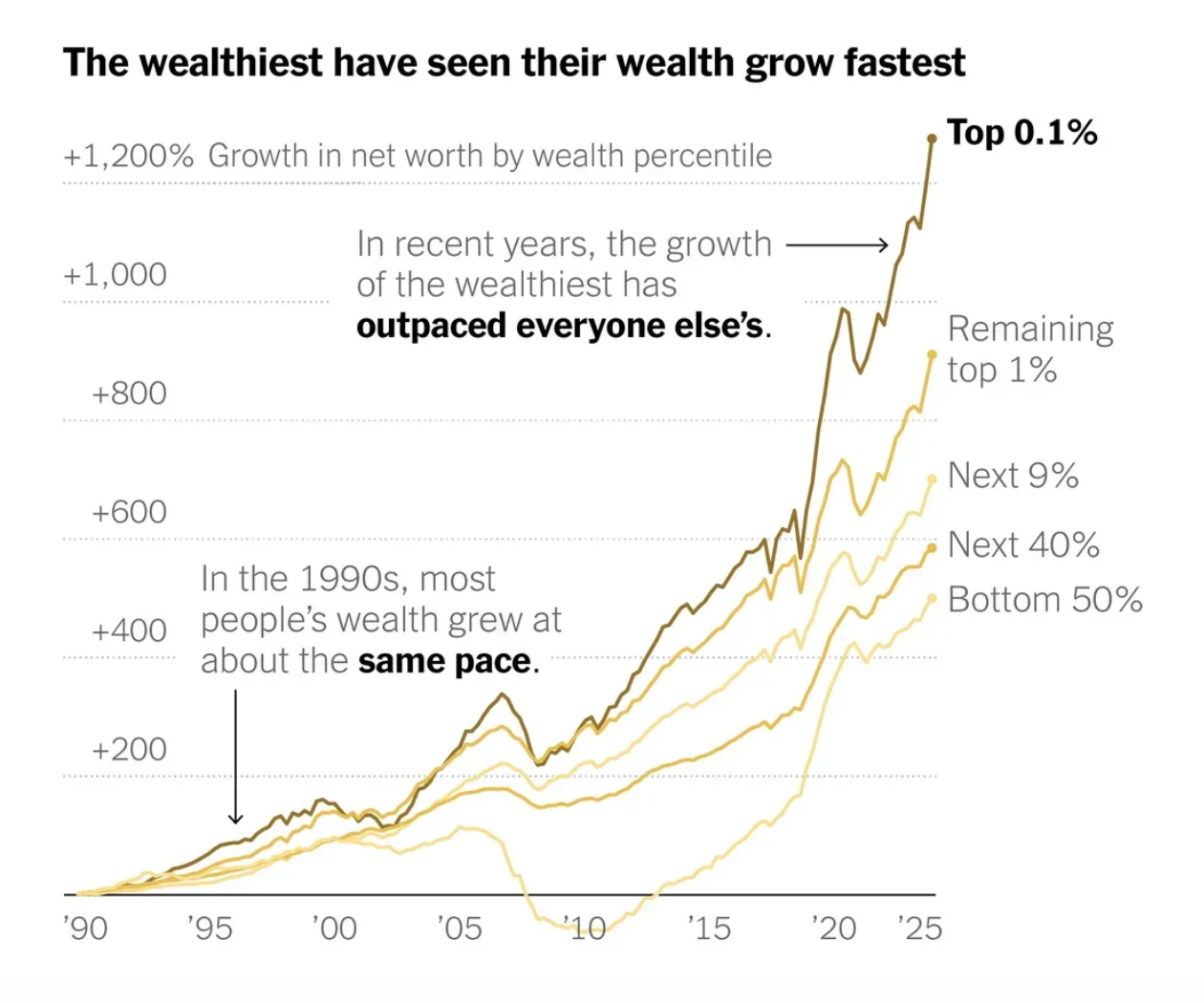
Last year, Trump and Republicans in Congress passed massive tax cuts for the wealthy in the so-called Big Beautiful Bill, while tens of thousands of Rhode Islanders face huge cuts to critical services like healthcare, nutrition, and other essentials. Meanwhile, the richest 1% and corporations are making record profits and paying lower wages, as working families work harder and harder to make ends meet.
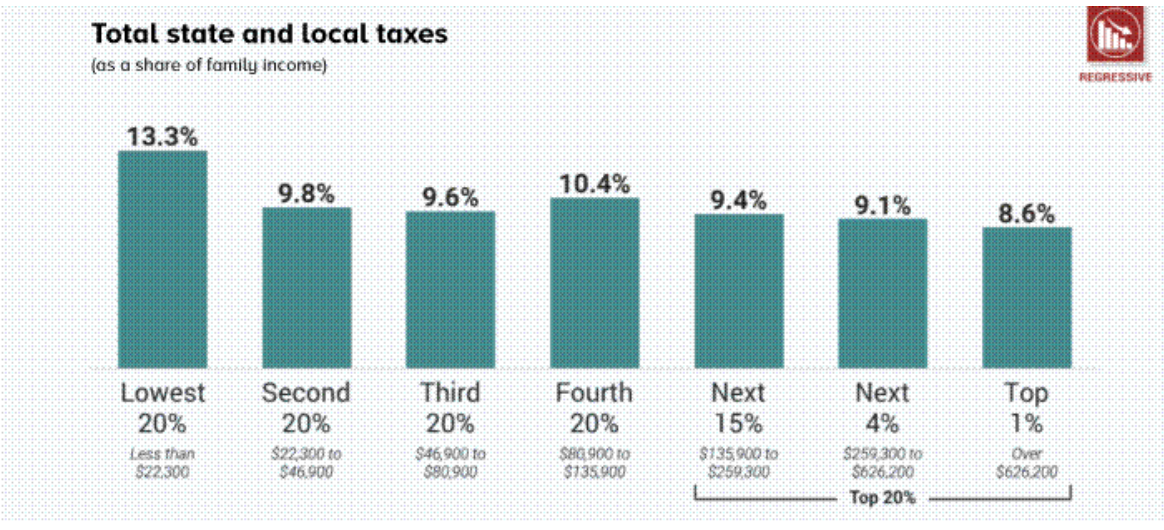
In Rhode Island, while the rich keep getting richer, they’re not paying their fair share. For years, the highest-income households in Rhode Island – those in the top one percent – have paid a smaller share of their income in state and local taxes than any other income group. They’ve also benefited from repeated federal tax cuts: 83 percent of benefits from the first Trump tax cut, passed in 2017 and renewed last year, went to the top one percent.
People with lower incomes paying more of their income in taxes than people with the highest incomes isn’t fair. The richest Rhode Island residents can clearly afford to pay a little more to help make sure the federal cuts don’t hurt more Rhode Islanders, and to make the big investments in our communities that benefit all of us. We need the Fair Share for Rhode Island Package to make our tax system and economy fair, and to make sure it benefits all of us – not just the wealthiest 1%.
In Rhode Island, while the rich keep getting richer, they’re not paying their fair share. For years, the highest-income households in Rhode Island – those in the top 1 percent – have paid a smaller share of their income in state and local taxes than any other income group. They’ve also benefited from repeated federal tax cuts: 83 percent of benefits from the first Trump tax cut, passed in 2017 and renewed last year, went to the top 1 percent.
People with lower incomes paying more of their income in taxes than people with the highest incomes isn’t fair. The richest Rhode Island residents can clearly afford to pay a little more to help make sure the federal cuts don’t hurt more Rhode Islanders, and to make the big investments we’ve been putting off. We need the Fair Share for Rhode Island package to make our tax system and economy fair, and to make sure it benefits all of us – not just the wealthy 1%.
what about small
businesses?
-
While opponents of the Fair Share for Rhode Island Package like to talk about the impact on small businesses as a scare tactic, most of what they say just isn’t factual. Since the Fair Share for Rhode Island Package does not change the basic structure of the tax code, there is a clear line of who pays a little more: taxpayers making more than $640,000 per year in personal income.
It doesn’t matter how much revenue or profit a business has: only business owners or shareholders who earn more than $640,000 in personal income in a single year will pay more. Only one percent of Rhode Island filers have taxable personal income over $640,000 million that would be subject to the Fair Share for Rhode Island Package – only a fraction of those are business-owners.
-
The same goes for businesses structured as ‘S-Corporations’, or pass-through entities, where shareholders of a corporation receive direct profits from a business, after the business expenses are subtracted. Shareholders and owners of S-Corporations already pay income taxes only on their share of profits – it is these shareholders’ personal income, and the tax code treats it as such. Since the Fair Share for Rhode Island Package makes no changes to the basic structure of the tax code, if a shareholder or business owner makes more than $640,000 in income from any entity, including pass-through profits, they will pay the additional 3 percent surtax. The majority of owners and shareholders don’t make more than $640,000 a year in personal income, and will not pay more.
Fair share and
the economy
-
The millionaire’s tax is Governor McKee’s proposal to pass a three percent surtax on Rhode Island earners who make more than one million dollars a year. It's a good start from the Governor, but it leaves too much money on the table. The Governor’s proposal generates approximately $130 million per year, while the Fair Share for Rhode Island Package generates over $650 million. The Governor’s proposal neglects to tax the wealthiest Rhode Islanders in a way that genuinely reflects their ability to pay and leaves many loopholes open in the tax code. The Governor’s proposal still leaves too many nurses and teachers paying more of their income in taxes than the wealthiest 1%.
For example, under the Governor’s proposal, if both an heir in Newport with $500 million in yachts, jewelry, and fine art, and a teacher with no savings in the bank bring home $50,000 in labor income next year, they would pay the same amount in federal taxes, despite their vastly different circumstances. Just increasing income taxes won’t address this problem.
-
This has been the largest scare tactic used by opponents of the Fair Share for Rhode Island Package. But in Rhode Island and across the country, we’ve actually seen the opposite – businesses and high-earning taxpayers prefer to live and do businesses in states where wealthy people pay their fair share in taxes, because it creates a stronger economy, better services for them and their families, and more potential for future generations to thrive.
In fact, one of Rhode Island’s largest businesses, Hasbro, which created thousands of jobs in Rhode Island and was one of Pawtucket’s biggest taxpayers, moved to Massachusetts after they passed their Fair Share Amendment.
Despite being debunked many times over, the “wealthy tax flight” myth is a common counter argument. But while some tax migration is inevitable, the wealthy that move to avoid taxes represent a tiny percentage of their own social class. Most high-earners stay where they are no matter the tax rate because of family, social networks and local business knowledge.
Findings from the State Revenue Alliance and the Institute for Policy Studies support the case against tax flight: The number of individuals with a net worth of at least seven figures continued to expand in both Massachusetts and Washington State after tax hikes. The millionaire class has grown by 38.6 percent in Massachusetts and 46.9 percent in Washington State over the past two years. Those making over seven figures in those states saw their wealth grow by $580 million and $748 million, respectively.
In fact, one of Rhode Island’s largest businesses, Hasbro, which created thousands of jobs in Rhode Island and was one of Pawtucket’s biggest taxpayers, moved to Massachusetts after they passed their Fair Share Amendment.
After making the wealthiest pay their fair share in taxes, Massachusetts also saw its largest population increase in 60 years, were ranked the strongest state economy in the country and the nation's best state to live in, and rose 10 spots on the list of fairest state tax systems. And a recent study found that the number of millionaires and ultra-wealthy individuals rose significantly in the two years after the Fair Share Amendment was passed.
Despite being debunked many times over, the ‘wealthy tax flight’ myth is a common counter. But while some tax migration is inevitable, the wealthy that move to avoid taxes represent a tiny percentage of their own social class – most high-earners stay where they are no matter the tax rate because of family, social networks and local business knowledge.
Findings from the State Revenue Alliance and the Institute for Policy Studies support the case against tax flight: The number of individuals with a net worth of at least seven-figures continued to expand in both Massachusetts and Washington after tax hikes. The millionaire class has grown by 38.6 percent in Massachusetts and 46.9 percent in Washington over the past two years. The seven-figure clubs in those states saw their wealth grow by $580 million and $748 million, respectively.
-
After making the wealthiest pay their fair share in taxes, Massachusetts saw its largest population increase in 60 years, were ranked the strongest state economy in the country and the nation's best state to live in, and rose 10 spots on the list of fairest state tax systems. And a recent study found that the number of millionaires and ultra-wealthy individuals rose significantly in the two years after the Fair Share Amendment was passed.
States who have chosen a fairer tax system by asking their wealthiest residents to pay a little more have also became richer. The four percent surtax on million-dollar incomes in Massachusetts and the seven percent tax on capital gains of $250,000 or more in Washington State succeeded in raising revenue — $2.2 billion for FY 2024 and $1.2 billion in its first two years of implementation, respectively.
There’s also evidence that higher taxes on the rich speeds up economic growth. When the top marginal tax rate has been high — between 71 to 92 percent — growth has averaged four percent a year. But when the top rate has been low — between 28 and 39 percent — growth has averaged only 2.1 percent.